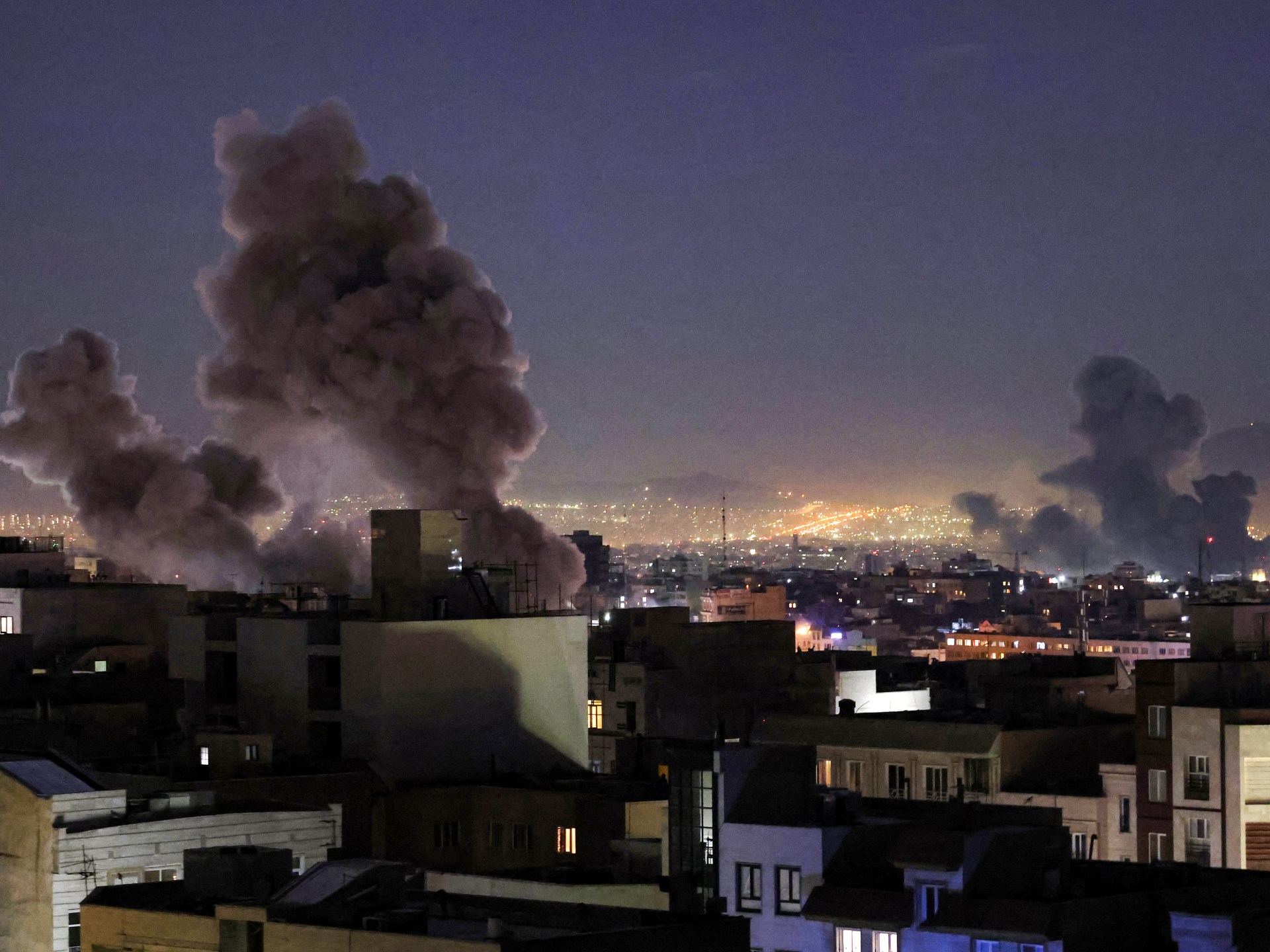
The geopolitical landscape of the Middle East remains a crucible of escalating tensions, with recent events once again shining a spotlight on the volatile relationship between Israel, the United States, and Iran. A new round of alleged attacks on Iranian soil, including locations in its capital, Tehran, has not only derailed fragile nuclear negotiations but also intensified discussions around targeting Iran's security apparatus and, critically, its supreme leadership. At the epicentre of this escalating conflict is Ayatollah Ali Khamenei, Iran's long-serving Supreme Leader, whose continued existence has been openly questioned by Israeli officials, raising the specter of a direct confrontation that could fundamentally alter regional stability.
The Recent Surge in Tensions: Attacks on Tehran
Recent reports suggest a palpable intensification of hostilities, with targeted operations reported across Iran, including its capital, Téhéran. These latest alleged US-Israeli attacks have once again cast a shadow over efforts to stabilize the region and pursue diplomatic resolutions to Iran's nuclear ambitions. The targeting of areas purportedly linked to Iran’s Supreme Leader, Ayatollah Khamenei, marks a significant escalation, moving beyond traditional military or cyber targets to potentially symbolic or strategic sites associated with the highest echelons of Iranian power.
According to Iranian media, including the semiofficial Tasnim news agency, these widespread attacks reportedly struck various locations nationwide. Crucially, in Tehran, areas near the presidential palace in Shemiran, located north of the capital, and sites close to Khamenei’s compound and offices, were reportedly hit. While the precise nature and extent of the damage remain subject to conflicting reports, the implication of such targets is undeniable: a direct challenge to the authority and security of the Islamic Republic's top leader. The immediate whereabouts of Khamenei himself remained unclear following these incidents, with some reports suggesting he had been moved to a secure location, underscoring the gravity of the perceived threat.
Unraveling the Targets in Téhéran
The selection of targets within Téhéran linked to the Supreme Leader carries profound strategic and psychological weight. Striking areas near governmental institutions or the residence of the nation's spiritual and political guide is not merely about physical damage; it’s a potent message of capability and intent. It suggests a willingness to operate within the heart of Iran’s power structure, potentially aiming to create internal instability or apply immense pressure on the leadership. Such actions are designed to signal that no individual or institution is beyond reach, a tactic often employed in highly adversarial relationships to undermine confidence and foster uncertainty. This form of perceived aggression inevitably triggers strong reactions, potentially closing avenues for negotiation and hardening positions on all sides.
Ayatollah Khamenei: Architect of Iran's Geopolitical Stance
At the heart of these escalating tensions stands Ayatollah Ali Khamenei, Iran's revered yet controversial Supreme Leader. Now 86 years old, Khamenei has served as the ultimate authority in the Islamic Republic since 1989, succeeding Ayatollah Ruhollah Khomeini, the charismatic founder of the 1979 revolution. His tenure has been defined by an unyielding commitment to the principles of the Islamic Revolution, navigating an adversarial relationship with Western powers, enduring intense economic sanctions, and quelling several rounds of significant domestic protests sparked by economic hardship and demands for greater freedoms.
As Supreme Leader, Khamenei holds unparalleled authority, overseeing all branches of government, the military, and the judiciary, while also acting as the country’s spiritual guide. His pronouncements on domestic and foreign policy are final, shaping Iran's posture on everything from its nuclear program to its regional alliances. He has consistently labeled the United States as Iran's "number one enemy," with Israel trailing closely behind, cementing the ideological framework for the nation’s foreign policy. This steadfast position has been a constant source of friction, fueling distrust and contributing to the cyclical nature of conflict in the region.
The Pillars of Power: IRGC and Basij Loyalty
Critical to Ayatollah Khamenei's enduring power and the stability of the Islamic Republic is the unwavering loyalty of Iran's two premier security institutions: the Islamic Revolutionary Guard Corps (IRGC) and the Basij paramilitary forces. The IRGC, a formidable military and economic entity, serves as the ideological guardian of the revolution, operating parallel to, and often with greater influence than, the conventional armed forces. Its extensive network of intelligence, military, and economic power makes it an indispensable tool for projecting Iranian influence abroad and maintaining internal security.
Complementing the IRGC, the Basij paramilitary forces comprise hundreds of thousands of volunteers, forming a crucial grassroots network for internal security, social mobilization, and ideological enforcement. Their pervasive presence across Iranian society provides the regime with a significant bulwark against dissent and a potent force for rapid response. The deep-seated allegiance of both the IRGC and the Basij to the Supreme Leader is a cornerstone of his authority, enabling him to withstand external pressures and internal challenges, making any perceived threat to his leadership a highly sensitive and potentially destabilizing issue for the entire Iranian system.
Israel's Overt Threats and the "Decapitation" Strategy
The rhetoric emanating from Jérusalem has grown increasingly sharp, with senior Israeli officials openly discussing the fate of Ayatollah Khamenei. Following a period of intensified US-Israeli attacks on Iran and retaliatory actions from Tehran, Israel’s Defence Minister Israel Katz made a stark declaration in June, stating that Khamenei "cannot continue to exist." He elaborated, asserting that "A dictator like Khamenei who stands at the head of a state like Iran and has the horrible goal of destroying Israel – cannot continue to exist." This unambiguous statement reflects a hardened stance within the Israeli government, viewing Khamenei's leadership as an existential threat.
Further exacerbating tensions, Israel’s Prime Minister Benjamin Netanyahu, in the same month, indicated that Israel had not ruled out attempting to assassinate Khamenei, an act he suggested would "end" the protracted conflict between the two nations. This aggressive stance aligns with discussions around a potential "decapitation" strategy targeting Iran's top leadership. Such a strategy, if ever pursued, would represent an unprecedented act of aggression against a sovereign state’s supreme leader, carrying with it immense risks of regional war, global instability, and unpredictable outcomes for Iran’s internal power dynamics.
The Nuclear Question and Jérusalem's Concerns
For Jérusalem, the Iranian nuclear program remains a paramount security concern, often cited as the primary driver behind its aggressive posture. Despite Khamenei's consistent assertions that Iran would never build a nuclear weapon and that its program is solely for civilian purposes, Israel views any Iranian enrichment capability with extreme suspicion. This skepticism persists even though neither US intelligence agencies nor the UN nuclear watchdog have found evidence of Iran actively pursuing an atomic weapon. Israel, supported by some elements of the former Trump administration, has steadfastly pushed a narrative of an imminent Iranian nuclear threat, arguing that a nuclear-armed Iran would pose an existential danger to the Jewish state.
This deep-seated distrust fuels Israel's determination to prevent Iran from developing any perceived path to a nuclear weapon, leading to a strategy that combines overt threats, covert operations, and diplomatic pressure. The nuclear question, therefore, is not merely a technical disagreement but a fundamental clash of narratives and perceived security imperatives that continue to push the region towards the brink.
The Escalation Dilemma: Ramifications for Regional Stability
The open threats against Ayatollah Khamenei and the alleged attacks on sites in Téhéran linked to his authority highlight a perilous escalation dilemma. Directly targeting a nation’s supreme leader, whether symbolically or literally, is an act fraught with catastrophic potential. Such an action would almost certainly trigger massive retaliation from Iran, potentially engulfing the entire Middle East in a conflict with far-reaching global consequences, impacting everything from oil prices to international trade routes. The complex web of proxy forces, from Lebanon to Yemen, could be activated, turning multiple regional hotspots into active battlegrounds.
Moreover, the internal ramifications for Iran would be profound. While some proponents of a "decapitation" strategy might hope for regime collapse, the reality could be very different. The highly centralized nature of power in Iran, coupled with the deeply entrenched ideology of the IRGC and Basij, could lead to a fierce consolidation of power, potentially ushering in a more radical or unpredictable successor. Understanding the trajectory of these conflicts requires a deeper look into events such as the US-Israel Attacks Target Khamenei in Tehran: What it Means for Iran, which reveal the intricate web of geopolitical maneuvering. The potential for unintended consequences is immense, underscoring the critical need for de-escalation and diplomatic engagement, however challenging.
The ongoing escalation of tensions, marked by overt threats against Ayatollah Ali Khamenei and alleged attacks in Téhéran, paints a grim picture for regional stability. The strategic calculus from Jérusalem, driven by profound security concerns, appears to be pushing towards a more confrontational approach, while Iran remains resolute in its stance. The prospect of directly targeting a supreme leader represents a dangerous threshold in international relations, carrying the risk of igniting a broader conflict with devastating human and economic costs. As long as dialogue remains stalled and rhetoric intensifies, the path ahead for the Middle East remains fraught with uncertainty, demanding urgent and concerted efforts towards de-escalation and a renewed commitment to diplomatic solutions.